
Expanding from one retail store to a number of them is a significant step for any business. It shows increasing customer demand for a certain product, better branding awareness and more confidence in the company’s products/services. However, managing several retail locations requires additional effort as well. In addition to maintaining inventory across all locations, the business owner should be able to monitor sales and the results, keep prices consistent, coordinate employees’ work and run promotions, as well as make sure that customers will receive the same high quality of service wherever they go in the branch.
However, as the number of retail operations increases, it becomes harder to do everything manually. The information may be outdated and inaccurate, pricing inconsistencies might occur, as well as problems with the inventory control system. Thus, technology becomes crucial for any expanding retailer. With modern centralized POS systems supported by powerful software for managing multi-store enterprise, the business owner can control their enterprise retail operations using only one solution. Along with efficient retail network management and integrated enterprise payment systems, it helps the retailer to succeed in their further growth.
The Challenges of Managing Multiple Retail Locations
Running a single shop already necessitates managing inventory, personnel, customers, payment processing, and accounting. However, running many stores entails a totally new set of challenges for management.
Different stores can have various sales profiles, personnel needs, customer tastes, and inventory needs. Unless there is some central control, each store could create its own way of operating, which could negatively influence the efficiency of the whole business. It will be hard to analyze how each store is doing and how to solve any problems arising in the operation. Businesses should not only open more branches but also be prepared to manage all of them.
Why Centralisation Becomes Essential
Many growing retailers initially manage multiple stores using separate systems connected through spreadsheets, emails, or manual reporting. While this approach may work temporarily, it becomes increasingly inefficient as operations expand.
Centralisation brings together information from every location into one unified platform. Sales, inventory, pricing, promotions, customer data, and reporting become accessible through a single management system rather than multiple disconnected databases.
Well-designed centralized POS systems eliminate much of the administrative complexity associated with managing several retail locations while improving operational visibility throughout the organisation.
Understanding Centralized POS Systems
The centralized platform of POS systems links the branches together via the same database where the managers are able to monitor the business operations from a single point.
Instead of each branch functioning on its own, the information updates in real time or almost real time depending on the particular structure of the system.
Information about sales, inventory movement, product updates, promotion and customers becomes synchronized throughout all stores participating in the process. Today’s systems allow for cloud access as well so that the authorized managers can assess business performance any time.
Consistent Pricing Across Every Store
Pricing must always be consistent irrespective of the branch that customers visit. The inconsistency in the price of products across branches may confuse customers, and at the same time reduce their confidence.
Through centralised systems, retailers will be able to change prices at once in all their branches. This will eliminate the need for manual adjustment of prices in each branch. Good multi-store management software will help to keep prices consistent across all the stores.
Better Inventory Visibility
Inventories become much harder to manage when companies begin to spread themselves out into numerous locations. A store might be having shortages in its inventories even when other stores have the same products in abundance.
With centralized inventory control, management is able to view inventory at all locations at once. They can spot inventory which is selling slowly and move products around different stores. This kind of inventory control makes it easier for retail firms to purchase more efficiently.
Faster Decision-Making
Business decisions become more effective when based on timely, accurate information. Without centralised reporting, management may wait days or weeks before receiving complete sales figures from every location.
Centralised systems provide real-time dashboards showing sales performance, inventory movements, customer activity, and operational metrics across the entire business. Managers can identify trends, investigate issues, and implement improvements much more quickly.
Modern centralized POS systems therefore support proactive management rather than relying on delayed reporting after problems have already developed.
Supporting Business Growth
Expansion often continues beyond the second or third store. Businesses planning long-term growth require technology capable of supporting future development without repeated system replacements.
Scalable multi-store management software allows retailers to add new locations while maintaining consistent operational processes throughout the organisation. New branches integrate into existing reporting, inventory management, pricing, and customer databases with minimal disruption.
Scalability enables businesses to focus on growth opportunities rather than constantly redesigning operational systems.
Improving Customer Experience
Customers increasingly expect seamless shopping experiences regardless of location. They appreciate consistent pricing, reliable product availability, loyalty programme integration, and flexible purchasing options across every branch.
Centralised systems support these expectations by sharing customer information, purchase history, loyalty rewards, and promotional eligibility throughout the retail network. Customers enjoy more consistent service because employees have access to relevant information regardless of store location.
Strong retail network management therefore contributes directly to customer satisfaction while strengthening long-term brand loyalty.
Streamlining Promotional Campaigns
Managing promotions across multiple stores can become time-consuming without central coordination. Different locations may accidentally use outdated pricing, incorrect promotional dates, or inconsistent product selections.
Central management allows retailers to launch campaigns simultaneously across every participating location. Promotional pricing, coupons, loyalty offers, and seasonal discounts can all be distributed from one central platform.
This consistency strengthens enterprise retail operations while reducing administrative workload for individual store managers.
Better Financial Reporting
Financial reporting becomes increasingly complicated as businesses operate more locations. Management requires both individual store performance and consolidated company-wide results to support strategic planning.
Centralised reporting automatically combines sales, payment activity, refunds, discounts, tax information, and operational metrics into unified reports. Finance teams spend less time collecting data while gaining more accurate organisational insights.
Reliable enterprise payment systems also simplify reconciliation by integrating payment processing information across every business location.

Managing Staff More Efficiently
Multiple locations often require employees to work across different branches depending on operational needs. Centralised systems simplify employee management by maintaining consistent access controls, permissions, and reporting throughout the organisation.
Management can monitor staff performance, transaction activity, and operational compliance using shared reporting standards. Employee training also becomes more effective because every location uses similar technology and operational procedures.
Integrated multi-store management software supports consistent operational practices while simplifying workforce administration across expanding retail networks.
Stronger Retail Network Management
Successful retail expansion depends on maintaining consistency throughout every location. Different stores should operate according to shared organisational standards while remaining flexible enough to meet local customer needs.
Effective retail network management coordinates inventory, pricing, promotions, staffing, reporting, and operational procedures across the business. Centralised technology provides the infrastructure needed to maintain these standards efficiently.
Rather than managing each location separately, leadership teams oversee the retail network as one connected organisation with shared objectives and coordinated operations.
Enterprise Payment Systems Improve Consistency
Payment processing becomes more complex when multiple stores operate independently using different providers or configurations. Variations in payment methods, reporting formats, or transaction procedures increase administrative complexity.
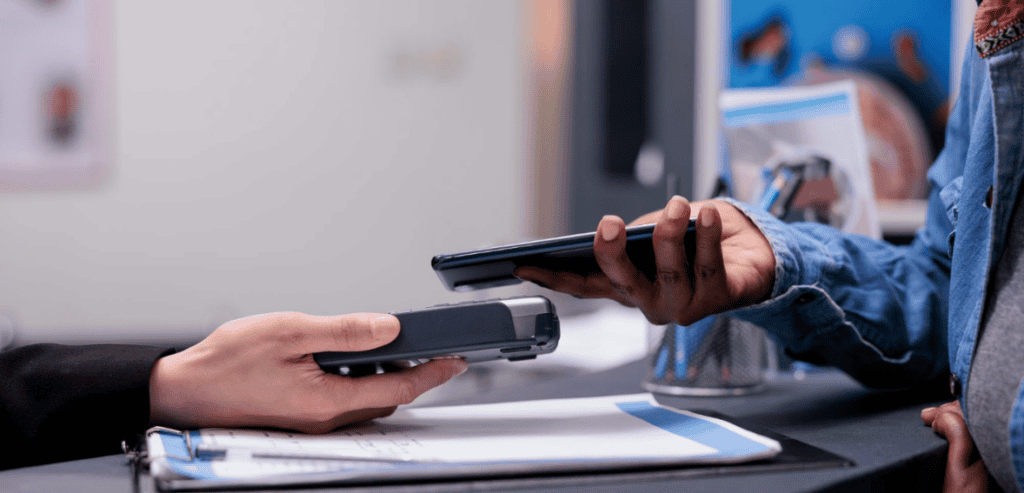
Integrated enterprise payment systems standardise payment acceptance throughout every location. Card payments, digital wallets, gift cards, refunds, and loyalty programmes follow consistent operational rules regardless of where transactions occur.
This standardisation simplifies financial management while improving customer confidence through reliable payment experiences across every store.
Data Supports Better Business Strategy
One of the greatest advantages of centralised systems lies in the quality of business insights they provide. Sales performance, customer behaviour, inventory turnover, promotional effectiveness, and operational efficiency become measurable across both individual stores and the wider organisation.
Management can identify high-performing locations, recognise emerging customer trends, evaluate marketing campaigns, and allocate resources more effectively. Strategic planning becomes evidence-based rather than relying primarily on intuition.
Comprehensive reporting generated by centralized POS systems supports better long-term decision-making throughout the business.
Maintaining Security Across Locations
Operating multiple stores increases responsibility for protecting financial information, customer data, and operational systems. Security standards must remain consistent regardless of location.
Centralised administration allows businesses to manage user permissions, software updates, password policies, transaction monitoring, and data protection from one central platform. Security improvements can be implemented across every store simultaneously.
Well-managed enterprise payment systems also help maintain consistent payment security standards throughout expanding retail operations.
Supporting Omnichannel Retail
Today’s customers often interact with retailers through multiple channels, including physical stores, websites, mobile applications, social media, and click-and-collect services. Successful retailers increasingly integrate these experiences into one connected customer journey.
Centralised technology supports omnichannel operations by sharing inventory, customer information, payment records, and order management across every channel. Customers experience greater convenience because information remains consistent regardless of how they choose to shop.
Effective retail network management therefore extends beyond physical stores into broader digital retail experiences.
Preparing for Future Expansion
Retail growth rarely stops after opening several successful locations. Many businesses continue expanding into new cities, regions, or countries while introducing additional product categories or service offerings.
Selecting scalable technology early reduces future operational disruption. Businesses avoid replacing fragmented systems repeatedly because their infrastructure already supports continued expansion.
Flexible multi-store management software provides long-term value by adapting alongside organisational growth while maintaining operational consistency throughout the retail network.
Overcoming Implementation Challenges
Although centralised systems provide substantial benefits, successful implementation requires careful planning. Data migration, employee training, system integration, operational testing, and change management all contribute to successful deployment.
Businesses should introduce new technology gradually while ensuring employees understand both system functionality and operational expectations. Strong vendor support also helps minimise disruption during implementation.
Careful planning ensures enterprise retail operations transition smoothly towards more efficient centralised management without negatively affecting customer service.
Why Centralised Management Strengthens Competitiveness
Retail competition continues increasing as customer expectations evolve. Businesses that respond quickly to market changes often outperform competitors relying on slower manual processes and fragmented information.
Centralised systems improve organisational agility by providing accurate data, faster reporting, stronger operational coordination, and more consistent customer experiences. These advantages support better decision-making while improving overall efficiency.
As technology continues advancing, centralized POS systems will remain essential tools for retailers seeking sustainable growth within increasingly competitive markets.
Conclusion
Managing multiple retail locations successfully requires far more than simply expanding physical store numbers. Businesses must coordinate inventory, pricing, payments, customer service, financial reporting, staffing, and operational standards across every location while maintaining consistent experiences for customers. Without the right technology, these responsibilities quickly become difficult to manage efficiently.
Modern centralized POS systems, supported by comprehensive multi-store management software, strengthen enterprise retail operations by bringing every location together through one connected platform. Combined with effective retail network management and integrated enterprise payment systems, these technologies improve visibility, consistency, operational efficiency, and decision-making throughout growing retail businesses. As retailers continue expanding into new markets and serving increasingly connected customers, centralised systems provide the strong operational foundation needed to support sustainable long-term growth.
Leave a Reply